
Welfare and Inequality in Public Policy: Preventive Strategy and the Role of Unemployment Compensation
Introduction
Welfare and inequality are important areas of public policy because they influence people’s living standards, economic opportunities, and financial security. In every economy, some individuals face greater difficulties because of unemployment, low wages, poverty, or unequal access to education and healthcare. Governments therefore introduce welfare policies to protect vulnerable groups and promote a fairer distribution of economic resources.
One important policy instrument is unemployment compensation, which provides temporary financial support to eligible workers who lose their jobs. It protects household income and helps individuals meet essential expenses while searching for new employment. Thus, Welfare and Inequality in Public Policy focuses not only on reducing existing poverty but also on preventing economic hardship before it becomes severe.
Meaning of Welfare and Inequality in Public Policy
Social welfare refers to the overall economic and social well-being of individuals and households. It includes access to adequate income, employment, education, healthcare, housing, and social protection. There are many social welfare states in the world, such as America, the United Kingdom, Germany, France, and Canada, etc, but Sweden, Denmark, Norway, Finland, and Iceland are top-level welfare states.
Income inequality refers to differences in income among individuals and households. Some people have access to education, health, skills, employment, and transportation facilities, while others do not. A few people have a lot of wealth, while others do not. People from all over the world do not have equal incomes; there are poor countries, middle-income countries, and rich countries.
If we talk about Pakistan, then the people of Pakistan are facing severe income inequalities, like less than 20 % are richest, while more than 45 % peoples are living below to poverty line ( means they are very poor).
Governments address these issues through progressive taxation, cash transfers, public education, healthcare services, minimum wage legislation, and social insurance programmes. Their objective is to improve living standards and ensure that economic opportunities are not restricted to higher-income groups. Pakistan is still not a welfare state.
Preventive Strategy and Social Protection
A preventive strategy aims to reduce the risk of poverty and financial insecurity before individuals experience serious economic hardship. Instead of providing assistance only after people become poor, governments introduce policies that protect their income, skills, and employment opportunities.
For example, when a business closes, its employees may suddenly lose their regular earnings. Without financial support, their families may struggle to afford food, healthcare, and education. Unemployment benefits can help prevent this temporary income loss from developing into long-term poverty.
Other preventive measures include vocational training, employment generation, affordable healthcare, education subsidies, and social insurance. These policies protect human capital and strengthen economic security.
Role of Unemployment Compensation in Reducing Inequality
Unemployment compensation is temporary financial assistance provided to eligible workers who lose their jobs and satisfy specified conditions. It replaces part of their lost earnings and helps them maintain basic consumption.
The International Labour Organization recognizes unemployment benefits as one of the nine branches of social security under Convention No. 102 (1952).
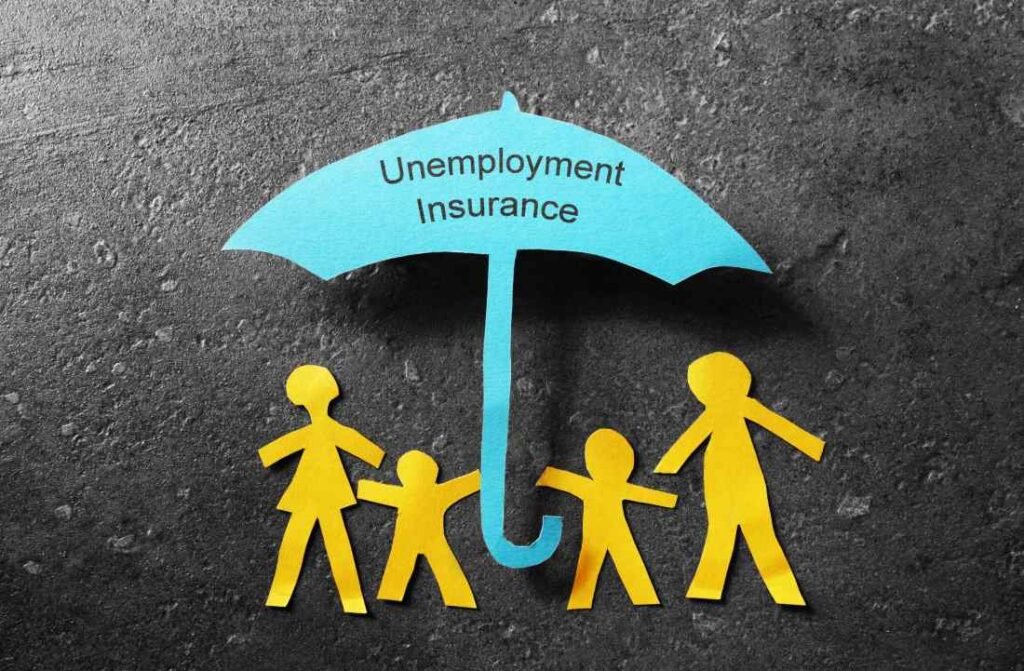
Unemployment compensation performs several important functions:
- Poverty prevention: It helps unemployed workers meet essential household expenses.
- Income redistribution: It transfers resources towards eligible individuals experiencing income loss.
- Consumption support: It enables households to continue purchasing essential goods and services.
- Economic stability: It supports aggregate demand during economic downturns.
- Employment transition: It gives workers time to search for suitable jobs rather than immediately accepting unsuitable employment.
Unemployment compensation also acts as an automatic stabilizer. During recessions, unemployment increases and benefit payments may rise, helping maintain household purchasing power and reduce the decline in aggregate demand.
Theoretical Foundations of Welfare Policies
Welfare and unemployment compensation can be explained through several economic and public policy theories.
Welfare economics examines how the allocation of economic resources affects social well-being. It provides a basis for government intervention when market outcomes create serious social inequalities.
Keynesian economics emphasizes the importance of aggregate demand. When unemployed individuals receive financial assistance, they can continue purchasing essential goods, supporting businesses and economic activity.
Charles Lindblom’s Incremental Model explains how governments often introduce policy changes gradually rather than making complete changes at once. Welfare programmes frequently develop through adjustments in eligibility, benefit amounts, and coverage.
Public Choice Theory also offers a useful perspective by examining how political incentives and institutional interests influence government decisions. It highlights the possibility of inefficient spending and political interference in welfare programmes.
Policy Formulation and Implementation
An effective unemployment compensation policy requires careful planning and coordination among government institutions, employers, workers, and citizens.
The policy process generally involves identifying unemployment and income insecurity as public problems, placing them on the government agenda, designing suitable benefit arrangements, and securing legislative approval.
After adoption, relevant departments register eligible workers, verify employment records, arrange payments, and provide employment support. Monitoring and evaluation help determine whether the programme reduces poverty, reaches deserving households, and uses public resources efficiently.
Governments should also examine benefit adequacy, administrative costs, employment outcomes, and public satisfaction. This feedback helps improve future policy decisions.
International Examples and Pakistan’s Experience
Different countries use different approaches to unemployment protection.
In the United States, the Unemployment Insurance programme provides temporary cash benefits to eligible workers who lose employment through no fault of their own. Individual states administer their programmes within federal guidelines. The programme also connects unemployed individuals with employment services and training opportunities.
In Pakistan, social protection is provided through programmes such as the Benazir Income Support Programme (BISP), which supports eligible low-income households. However, social assistance and unemployment insurance are different policy instruments.
According to the International Social Security Association’s Pakistan country profile, based on policies as of January 2024, Pakistan’s unemployment protection provision is limited to severance pay under specified labour law conditions. The International Labour Organization’s Decent Work Country Programme for Pakistan (2023–27) also identifies the expansion of social protection coverage as an important priority.
These examples demonstrate that developing an effective welfare system requires attention to labour market conditions, institutional capacity, and available financial resources.
Challenges and Limitations of Unemployment Compensation
Despite its benefits, unemployment compensation involves several challenges.
Limited government revenue can make it difficult for developing countries to finance sustainable benefit programmes. In Pakistan, the large informal employment sector creates an additional problem because many workers lack formal employment records and regular social insurance contributions.
Poor administration, corruption, political interference, and weak monitoring can also prevent benefits from reaching eligible individuals. Moreover, poorly designed programmes may create work disincentives if benefits are excessively generous or employment support is inadequate.
Governments can address these problems through transparent eligibility criteria, reliable employment databases, sustainable financing, digital payment systems, and vocational training. An effective system should combine income protection with active employment policies.
Conclusion
Welfare and inequality are essential areas of public policy because economic development should improve living conditions across different sections of society. Preventive strategies, income redistribution, education, healthcare, and social protection can reduce economic insecurity and promote equal opportunities.
Unemployment compensation is particularly important because it protects workers against sudden income losses, supports household consumption, and helps stabilize the economy during recessions. However, its success depends on sustainable financing, effective administration, and appropriate policy design.
For Pakistan, expanding social protection and exploring a financially sustainable unemployment protection system could strengthen economic security and reduce vulnerability. Ultimately, Welfare and Inequality in Public Policy should focus not only on providing financial assistance but also on creating opportunities for long-term economic and social development.
References Criminal Justice Policy: The Role of Policing, Courts, Prisons, and Corrections
Frequently Asked Questions
What is welfare policy?
Welfare policy refers to government measures designed to improve people’s living standards through income support, education, healthcare, employment opportunities, and social protection.
How does unemployment compensation reduce inequality?
It provides temporary income support to eligible unemployed workers, reducing the financial gap between employed and unemployed households.
What is a preventive strategy in public policy?
It is an approach that addresses the causes and risks of poverty before individuals experience serious economic hardship.
Does Pakistan have an unemployment insurance system?
Pakistan has social assistance and other social security arrangements, but the ISSA country profile identifies severance pay rather than a general unemployment insurance programme.
What is the difference between unemployment insurance and social assistance?
Unemployment insurance generally provides benefits based on previous employment and insurance contributions, whereas social assistance usually provides financial support according to household needs.
- International Labour Organization (1952). Social Security (Minimum Standards) Convention, No. 102.
- International Labour Organization (2023). Decent Work Country Programme for Pakistan (2023–27).
- International Social Security Association (2024). Social Security Country Profile: Pakistan.
- U.S. Department of Labor. State Unemployment Insurance Benefits.
- Lindblom, C. E. (1959). The Science of “Muddling Through”. Public Administration Review, 19(2), 79–88.
- Buchanan, J. M. (1986). The Constitution of Economic Policy.